PROGRAMS

Graphic Media Design Diploma

Design is thinking made visual.

Saul Bass, an American graphic designer and filmmaker

Graphic Media Design Diploma

Design is thinking made visual.

Saul Bass, an American graphic designer and filmmaker

Request Program Information

Please contact me with more information relating to the college and program. I understand I may cancel my consent at anytime.

Behind the Scenes

Take a tour of our Graphic Design department and see where ideas become reality. It’s your chance to connect with instructors, explore the tools of the trade, and picture yourself in the studio.

Schedule a Tour

Tuition is Listed on
PDF Application Forms

See Admissions Page

Talk to a PDA
Student Advisor

250-383-3631

Diploma Program [2 years]

Graphic Media Design

Next Cohort Start: September 28, 2026

Why study Graphic Design at PDA

Our 2-year Graphic Design Diploma program is designed to give students a comprehensive foundation in both the creative and technical aspects of graphic design, preparing them for exciting careers in the fast-paced and ever-evolving design industry. From typography and layout to branding and digital media, our program emphasizes hands-on learning experiences that reflect real-world design challenges, allowing students to build practical skills and creative confidence. A highlight of the program is the opportunity for students to showcase their work in our annual graduate portfolio show, where they present their design projects to industry professionals and the public. By building a diverse and professional portfolio, students graduate ready to make their mark in the world of design.

Careers in Graphic Design

Graphic Designer

Marketing or Advertising Designer

UX/UI Designer

Packaging Designer

Brand Identity Designer

Web Designer

Motion Graphics Designer

Multi-Media Designer

Freelance Designer

Environmental Graphic Designer

Students will learn to

Conceptualize and execute designs
for print and digital media

Master typography principles
for effective communication

Understand design principles and copywriting

Utilize industry-standard software
such as Adobe Creative Suite

Apply colour and design principles to a range of projects

Design and develop a website using WordPress and other web design tools

Build a polished, industry-ready portfolio.

Use UI/UX, marketing, social media marketing, and the business of Graphic Design to develop an effective campaign and promote a business for a graphic design company

Write a professional proposal and create an effective multimedia advertising campaign

Admission Procedures

Completion of high school or equivalent (GED)

Proof of education (transcript, diploma, letters of recognition)

Completed Application Form;

Signature of a parent or guardian is required for students under the age of 19

Non-refundable application fee

Copy of a valid government-issued photo ID or birth certification

Letter of intent detailing background and future goals

English language proficiency requirement. See more details on the Admissions page

*Please note that this requirement applies to all students, regardless of citizenship or residency. If the minimum grade requirement is not met, an English proficiency test may be considered as a supplementary document for admission.

Graphic Design Curriculum

Adobe Photoshop 1
Photoshop is the industry standard Graphic Design tool used to modify, manipulate, and enhance photographic and other images. Semester I is a hands-on course that will introduce students to the possibilities offered by this application, and prepare them to work in print and digital in terms of image quality, resolution, and color space.

Adobe Photoshop 2
Photoshop 2 is a hands-on course which will familiarize students with the use of Vector tools and masks, paths and shapes, advanced layer techniques, the use of Colour Channels and colour manipulation using the Hue & Saturation, Gradient Maps, and Colour Replacement Tools. Demonstrations and hands-on exercises will be reinforced with assignments that reflect the demands of the workplace.

Adobe Photoshop 3
Photoshop III is a hands-on course which challenges students to increase their repertoire of creative skills and techniques by exposing them to more advanced special effects and illustrative options. Assignments include coordinating and maintaining consistency over a range of images within a lavishly illustrated interactive document, special effects and perspective display on a variety of shapes and advertising materials, and creative use of Photoshop filters.

Advanced Adobe Photoshop Projects
Advanced Photoshop features will be used in creation of 6 projects, to be updated every year to utilize new Photoshop tools released by Adobe, and to instruct students in the latest Photoshop design trends.
This course is structured to give you a comprehensive background overview and introduce you to the overall graphic design environment. You will learn about some of the basic roles of a graphic designer through a series of practical projects. After this semester you will be familiar with the contemporary graphic design environment and be prepared to handle future intermediate and advanced college concepts and projects.

Through a series of discussions and exercises, students will be introduced to the elements and principles of design—for example, the Golden Mean. With an understanding of these basic concepts, students will be able to analyze their own and other designers work and discover why some things work and others do not. Students will also be introduced to a workflow methodology for creating designs, and will be able to apply what they have learned to the future creation of corporate identities and design work, including 2 & 3-D design.

This is a lecture and presentation-based class, using “A History of Graphic Design” by Philip B. Meggs as our guide. We will start with the invention of Printing and follow the development of Art & Design to the 20th Century ‘Modern’ Style. Students will be asked to create presentations and artwork based on historical art movements and share them through presentations with the group.

Drawing & Illustration 1
Through a series of discussions, demonstrations, and hands-on assignments, Drawing + Illustration I students will be introduced to visual communication techniques appropriate to Illustration and Graphic Design. During this class students’ observation skills will be honed so that the perception of shape and space can more readily be abstracted to create logos and graphic elements. In addition, this class will prepare students for subjects such as Storyboarding, and Drawing + Illustration II, in which students will combine hand rendered art with digital techniques.

Drawing & Illustration 2
Through a series of discussions, demonstrations, and hands-on assignments in Drawing + Illustration 2 will introduce students to visual communication techniques appropriate to illustration and graphic design. In this course students’ observation skills will be honed so that the perception of shape and space can more readily be abstracted to create logos and other graphic elements.

The complex problems you’ll face in the workforce will require you to think critically and creatively, communicate your ideas effectively, and apply your specialized skills in a collaborative environment. Whether you’re working on a large-scale building development, making a movie, contributing to an online magazine, developing an app, or taking a new fashion line to market, the success of the project will rely on your ability to come together with others. In this team project-based course you’ll use the methods of design thinking to respond to a brief presented by a real community client.

Typography 1
Through discussion and practical projects this course will provide a basic grounding of typography within design, and what makes a good typographic solution to a design problem. The projects in this course will be focused on the imaginative and effective use of typography to create a sensitivity to typographic forms and their role in visual communication design. Typographic history, anatomy, measurement, how to choose appropriate typography for a specific design task, and rendering the typographic form by hand will be covered in this course.

Typography 2
Expanding on the skills gained in Typography 1, through discussion and practical projects Typography 2 will examine what makes a good typographic solution to a design problem. Although other design elements are an important element, the projects in this course will be focused on the imaginative and effective use of typography.

Typography 3
This course is a project-based practice of Typography and its use in Modern Graphic Design. During this third term we will be exploring how to utilize it effectively for the varying aspects of a modern label design. The project will get students into the technical basics of making an individual font using vector and type-foundry software.

Colour is a subject that appears almost everywhere, in all disciplines. Understanding colour helps students understand not just colour concepts but serves as a central orientation point for all things design related. Theory, Mixing, Systems, Psychology, Vision, Symbolism, and Harmonies are some of the topics covered as well as comprehensive history, the mechanics/science of colours, the brain, and design. In this course, student explore different aspects of colour and learn strategies of integrating colour for effective communication in design. It will provide students the knowledge from verified sources about the correct terminology and use of colours across design and other applications. Its goal is to clarify some of the confusion (even amongst professionals) in the more advanced uses of colour.

Adobe Illustrator 1
Adobe Illustrator is the primary illustration tool used in professional Graphic Design. Through a series of discussions and practical exercises we will explore the principles of vector-based graphics, and the concepts behind the industry standard PostScript/PDF languages.

Adobe Illustrator 2
Having completed the introductory Adobe Illustrator 1 course, this follow-up will continue to explore the many capabilities Adobe Illustrator offers for creating almost any imaginable artwork. Working on conceptual projects provides a framework for exploring these technical tools and deepening the understanding of the workings of vector-based graphics.

Adobe Illustrator 3
We will move directly into Illustrator design projects that will require the use of Adobe Illustrator as the primary design tool. It is through this practical process of project building that technical knowledge will be re-enforced and creative skills polished.

Adobe InDesign 1
Adobe InDesign is the primary page layout and desktop publishing software used in Graphic Design. Through a series of discussions and practical exercises, this introductory course introduces students to the principles of page layout and graphic communication. Students will learn the skills required to use InDesign to apply these principles to desktop publication. Special emphasis will be given to use of typography, inserted images, colour systems, and preparation of documents for printing.

Adobe InDesign 2
This course is designed to prepare students to work with more advanced features of InDesign, such as using Tables and Tabs to create financial documents. Knowledge of multi-page document features will be expanded, as will the use of more advanced typesetting practices. Assignments will reflect and reinforce the necessity for a more sophisticated and professional design output.

Adobe InDesign 3
This course is designed to expose students to advanced aspects of InDesign, and to enable them to bring their multi-page layout skills to a professional standard. Tight typography for newspapers and more creative layouts for interactive documents will be explored, as will laying out a grid system for calendars. The course includes a challenge for a non-profit organization which will require client interaction and a great deal of creativity.

Digital Photography 1
This course in an introduction to basic photography where students will learn about different camera features as well as concepts of exposure, composition, and perspective. Focus will be placed on making sure students are comfortable operating a camera and understand how they can use photography to enhance other aspects of their graphic design work images.

Digital Photography 2
This course introduces students to intermediate photographic techniques used in graphic design projects. Students will be introduced to projects requiring them to manually shoot raw photos, and edit using ACR, Bridge, and Photoshop together to achieve completion. Basic workflow techniques will also be addressed.

Web Programming 1
The course serves as an introduction to the world of web design and introduces a brief history of the web. Client-server model will be explained, as well as basic computer architecture and file systems structure. Attention will be given to the constraints and limitations of the client- server model that defines much of the browsable web. Students will learn how to use Adobe XD to create website mockups, and how to turn a mock- up into a functional website using HTML5 and CSS3. At the end of the course, the student should be able to demonstrate a good command of HTML5 & CSS3.

Web Programming 2
The course provides a continuation of Web Programming, with more CSS animations with addition of JavaScript to control user interaction via buttons and callback. Adobe XD more advanced features will be used, facilitating animated transitions and animations within mockups pages. As students become comfortable with basic JavaScript, jQuery will be introduced to illustrate how a JavaScript framework can accelerate development time.

Students will use creative solutions to resolve a series of design problems designed to expose them to varied forms and uses of Graphic Design. The course is designed to use two major design programs: Adobe Photoshop and InDesign, in combination to gain further understanding of how these programs complement and work together. The course is designed to reflect the studio environment. Projects will be given out by the instructor; students will submit roughs for all projects for discussion and approval and will then apply computer techniques to create finished artwork. Emphasis will be given to the rough and approval processes at both the studio level and the client level.

This course is a practical introduction to the art of copywriting. Discussion and presentations will include an introduction to the development of copywriting in the twentieth and twenty-first centuries and the psychology and ideation process that accompanied it. We will study case histories and analyze current day ads and ad campaigns. Students will brainstorm, write strategic statements, and present their own ads for critique. Topics addressed will include integrated marketing, finding efficient ad venues, identifying the target consumer, writing effective copy, and a basic intro to keywords and concepts for advertising on the web.

Marketing 1
This course is an introduction to marketing as it relates to graphic designers. It will cover the basic disciplines involved in marketing. This course is designed to give an introductory overview of the role that graphic design plays in marketing. Students will learn how marketing principles and graphic design work together in successful and effective communications solutions. Students will learn what triggers and motivates an audience to respond to graphic work and how to design appropriately to gain successful and effective results.

Marketing 2
This course continues to explore and expand upon the subject of marketing as it relates to graphic designers. This course uses practical projects to develop the skills necessary for designers to use design skills to successfully solve marketing challenges. Students will learn how graphic design is used to communicate product benefits and inform consumer perceptions to create successful and effective communication solutions.

Students will investigate what triggers and motivates an audience to respond to graphic work and how to design appropriately to obtain successful and effective results.

Storyboards and Infographics are visual representations intended to present information, data, or knowledge quickly and clearly, in a concise and understandable way. Uses of storyboards and infographics can provide compelling solutions to: confusing instructions, too many details, a complex process, wordy content, or excessive or uninteresting data.

Students will learn to understand data and present it as a story, pulling out the most interesting aspects and designing images to convey them. Storytelling can be used to create ads, motion pictures, games, and sets of step-by-step instructions. Stories presented as infographics can be used both to convey information and to influence perception of that information, thus making infographics effective in editorial writing.

User Interface (UI) and User Experience (UX) Design is the process of creating visual and structural interfaces on computerized devices. Designers strive to create interfaces which users will find are understandable, easy to use, and visually attractive. This course introduces students to UI design concepts, fundamentals, and to differences and similarities between dynamic designs for screens and static designs for print.

Included are considerations for different sizes and orientations of screens, visual hierarchy, colours and typography, intuitive navigation, information clarity, prototyping, and user feedback.

E-books/Digital Publishing
An E-Book (Electronic Book) is a publishing asset that delivers information in an electronic, long form publication. E-Books use either a mobile device, desktop computer, or specialized reader to display their content. This course will delve into product and marketing uses and advantages of digitally published items, as well as design differences between digital and traditional publications. General uses of digital publications will be explored: by businesses for information sharing, to use by a writer wishing to self-publish their first novel. Students will design digital book templates, covers, content, promotional materials, and other collateral used in the industry. Adobe InDesign’s digital publishing features will be studied and used, as well as Adobe Acrobat’s electronic forms publishing and editing capabilities.

Advanced Publishing
Using skills from previous graphic design courses, students will be working to produce and publish digital materials designed to enhance and maximise a company’s design presence. They will be responsible for designing and creating digital content for publications. Emphasis will be given to the fundamental disciplines involved in typography and page design.

CMS for Web will introduce students to uses and features of content management systems, structure and components of CMS, and how they are effective for websites and online use. The course will focus on hands-on use of WordPress, the most popular CMS for web.

Media Projects
Using current print and digital design skills, students will create visual communications materials for a specific brand. It will cover various media, from print to electronic/online and more. Students are paired in the roles of both client and designer, creating a fictitious start-up snowboarding company for themselves as clients and assigned a partner to design for.

Online Media Projects
Online Media Projects will provide students the environment and assistance to create an online presence. This course dovetails into GD238: “Portfolio & Personal Promotion” with an emphasis on personal branding and design consistency across print and online. Students will learn to create a repeatable and consistent design look beginning with a brand guide and extending with a portfolio website.

This course introduces Graphic Media Design students to the principles of Motion Design, focusing on integrating graphic design elements with 3D design and timebased media. Students will explore key concepts such as modeling, texturing, lighting keyframing, and visual storytelling while learning to use industry-standard software like Cinema 4D and Octane Render. The course emphasizes creating animations and still media to enhance brand narratives, user interfaces, and marketing collateral.

Social media has become a crucial outlet for businesses to build brand awareness and establish a relationship and basis of trust with the consumer. Through the use of organic social media and strategic content creation and implementation, a brand can position itself as a leader in its industry and attract an audience that will be truly invested in the business, helping them to foster trust and awareness within their community.

This course will give students the foundations for understanding how social media works, how it fits into a company’s traditional marketing strategy, and how to successfully build a brand using organic growth strategies. They will also learn how to create and test content as well as utilize each social media platform in best practice.

Given a thorough understanding of potential audience(s), a personality for the event can be defined and strongly positioned to maximize exposure and impact for the festival. From this point, a visual identity can be created for application to promotional and advertising elements for the event. A realistic budget will need to account for within local advertising possibilities, as well as the possibilities of a broader media approach.

Research, ideation, and development strategies explored in conceptual thinking and copywriting, classes will be utilized to develop a uniquely integrated marketing approach specifically suited for this event. Emphasis will be placed on researching aspects of the potential target market(s), as well as researching similar staged events in other locations resulting in the creation of a striking and memorable visual brand for the event and identifying realistic and suitable advertising and marketing strategies.

This course is designed to inspire students towards increased self-confidence in their marketability and to develop professional skills related to employment strategies and/or effectiveness in the workplace specific to freelance Graphic Design. A mock job interview with multiple instructors finishes the course. Multiple field trips to relevant job environments with opportunities to ask job specific questions of potential employers fill out the course. Practical tips for dealing with clients/employers and all aspects of the job are shared with the students.

Advanced Creative Techniques will be used in creation of 6 projects, to be updated every year to utilize new tools released by Adobe, and to instruct students in the latest graphic design trends.

Learn to create stunning 2D animations and motion graphics using Adobe After Effects. This hands-on course covers essential tools and techniques, including keyframing, effects, and masks, to bring your ideas to life. Perfect for beginners or those refining their skills, this course equips you to craft animations for social media, ads, films, and more.

Students will develop a personal identity and branding system to effectively promote themselves as professional designers. This course will focus on selecting, refining, and polishing portfolio pieces, ensuring students are well-prepared to present themselves confidently in a professional manner either as a freelance designer or for employment in a design studio upon graduation.

This program has been approved by the Private Training Institutions Regulatory Unit (PTIRU) of the Ministry of Post-Secondary Education and Future Skills of the Government of British Columbia.

2025 Graphic Media Design Student Work

2024 Student Work in Graphic Media Design

Apply for Graphic Design

Previous: Motion Picture Production

Focused on storytelling, cinematography, and production techniques, this program blends creative vision with hands-on technical skills—ideal for launching careers in film, television, digital media, and content creation.

MPP Program

Next: Fashion Design

From concept to runway, students gain the creative and technical skills to bring original fashion visions to life and stand out in a competitive industry.

FD Program
Get Program Info

Get program details, tuition, and next intake dates. Small classes · Industry instructors · Since 1991

Please contact me with more information relating to the college and program. I understand I may cancel my consent at anytime.
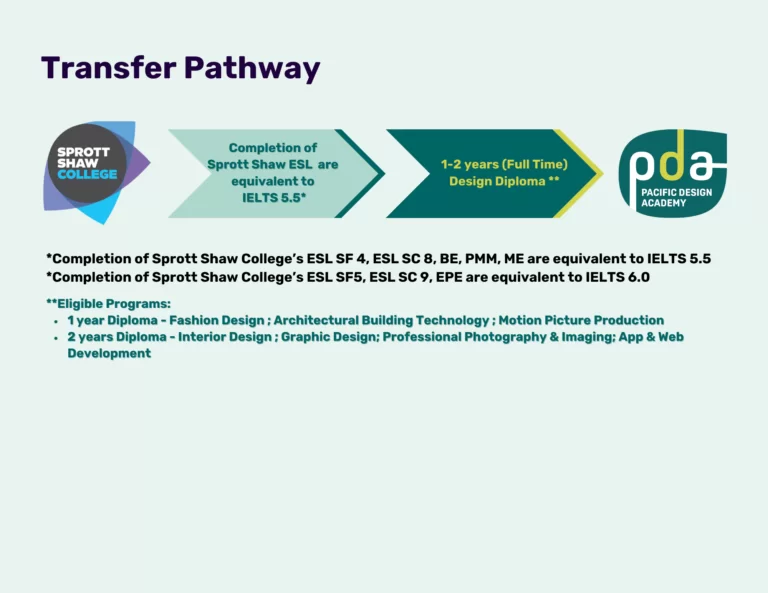
PathwaySprottShaw-768x593.png
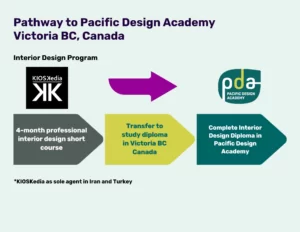
PathwayKioskedia-300x232.png
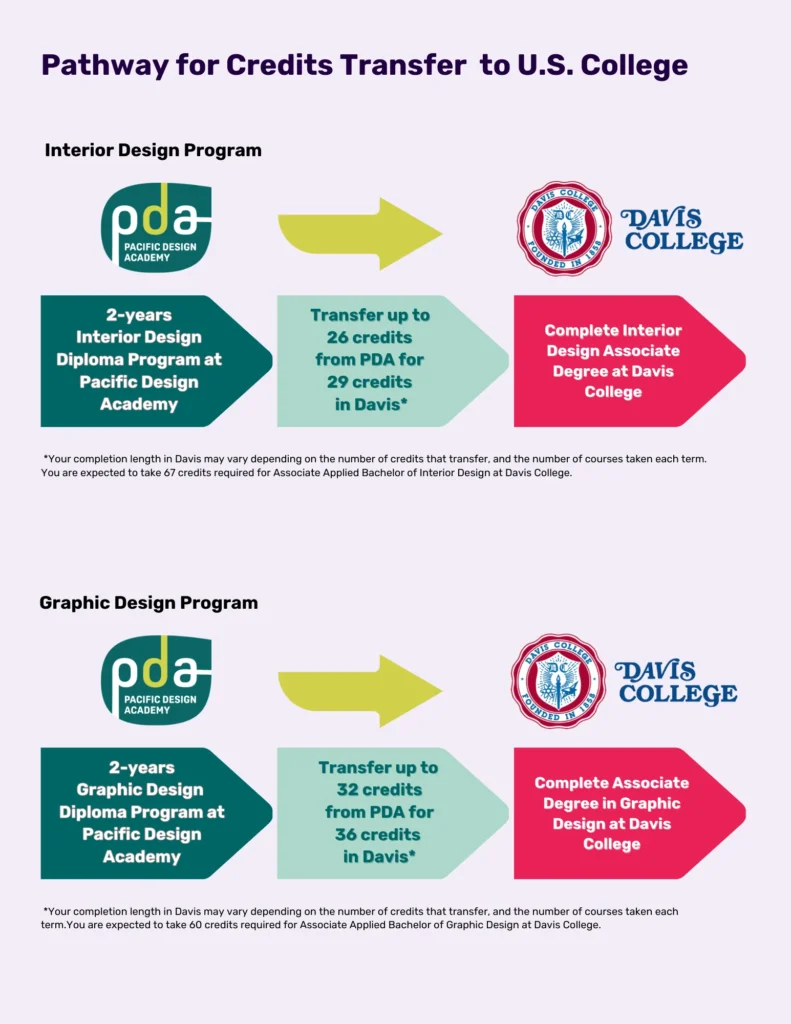
Pathway1
Pathway2-1
Explore
Drag